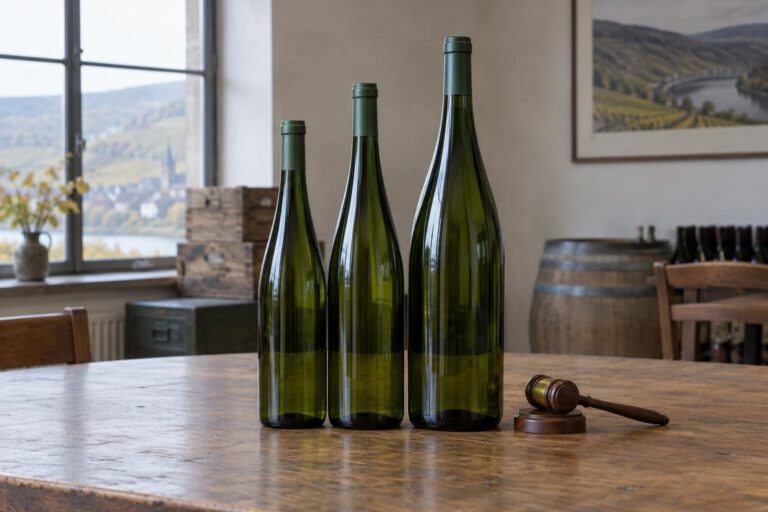
A wine estate can be small without tending just a few vines. That tension lies at the heart of the name Garage Caveau: Martin and Annette Fußer founded the estate in 2022 in Niederkirchen near Deidesheim. By their own account, “Garage” refers to small volumes of wine and an ambition to give individual vineyards focused attention. “Caveau” – French for wine cellar – adds a personal love of France to the name, which the couple also describe as part of the estate’s founding story.
The reason to take a closer look is its “Discovery of the Year” award in the VINUM Weinguide Deutschland 2027. This raises the estate’s profile, but in itself says little about how a young wine estate acquires land, organises its work or generates revenue. Publicly available information on these matters remains patchy.
A small range, several origins
The estate produces Riesling and Spätburgunder. According to its own account, the Riesling grapes for the wine “Mittelhaardt Deutsche Weinstraße” come from Forst, Deidesheim and Ruppertsberg. It also lists individual vineyard wines, including “Forster Musenhang”, “Deidesheimer Paradiesgarten” and “Ruppertsberger Reiterpfad”. For Spätburgunder, the website mentions vineyards within the Deidesheim boundaries, as well as the wine “Deidesheimer Mäushöhle”.
Garage Caveau describes its cellar practices as involving spontaneous fermentation and, for several wines, no fining or filtration. These are statements by the estate, not an independently verified account of every vintage or stage of production. Nor can certification or membership of a biodynamic association be established with certainty from the information consulted.
Vineyard area does not equal own-label wine volume
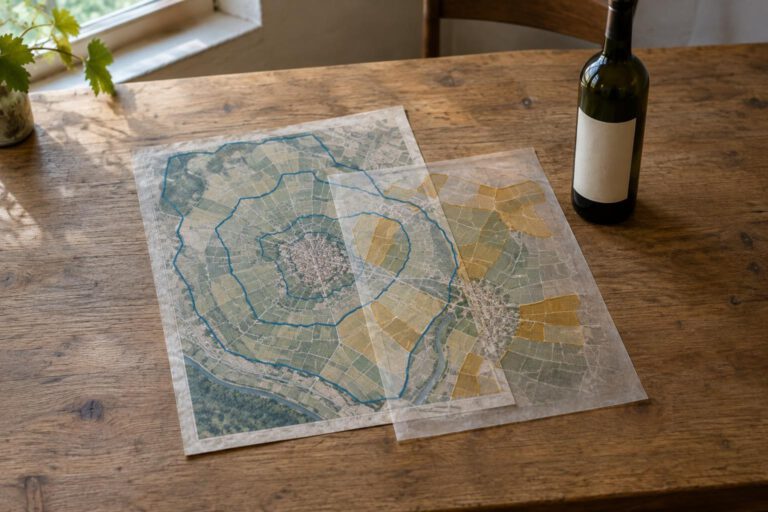
The VINUM wine guide outlines an unusual ratio: 35 hectares of leased vineyards, three hectares of which are used for the estate’s own wines, with annual production of no more than 5000 bottles. These figures come from the guide’s editorial text; no publicly available estate information could be found that would independently confirm the area and volumes. They should therefore be treated as figures reported there, rather than separately verified data.
If this distinction between the area farmed and the estate’s own wine production is accurate, it would represent a central business decision: working a larger vineyard area would not automatically lead to a correspondingly broad range of wines under its own label. There is no public documentation of how the various plots are used, whether grapes or other produce from the leased holdings are sold, or what cost and revenue structure lies behind this. Nor is reliable information available on employees, harvest organisation or sales channels.
A profile, not a full set of accounts
The profile discernible so far is built around a small number of grape varieties, named plots and a declared focus on small volumes. The founding story also tells of a new estate established after a split from the family business, as reported by the VINUM wine guide. However, there is no detailed, independently substantiated account of the transition – for example, regarding contracts, equipment or staff.
Garage Caveau thus remains an illuminating example of a business model whose economic logic cannot be read from the label or the number of hectares farmed alone. The small own-label range and the larger leased vineyard area mentioned in the guide could serve different purposes; precisely how cannot responsibly be quantified without further information. The award provides the reason for the attention. The estate’s business accounts have yet to be publicly set out.
Original reviewed by the editors · 5 November 2026