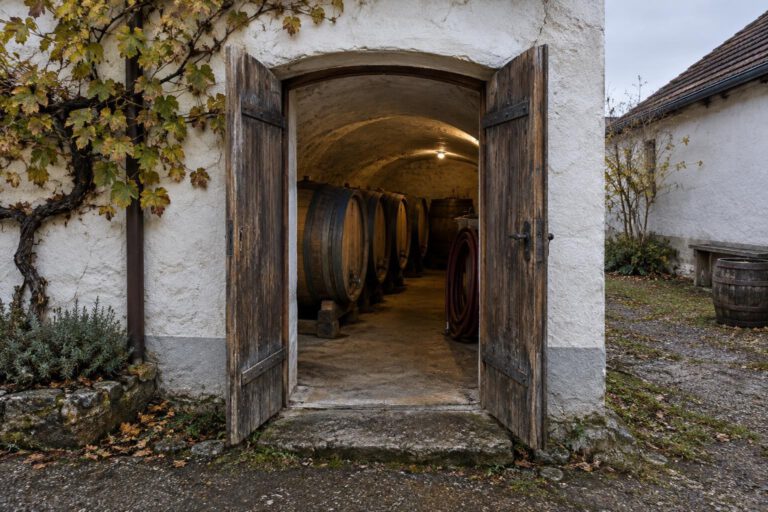
The Carinthian Winegrowers’ Association has announced an ‘Open Cellar Day’ for Saturday, 7 November. From 2pm to 8pm, visitors will be offered an insight into winegrowing in Austria’s southernmost federal state. The available event information did not yet allow individual confirmation of which wineries are taking part this year or the addresses where they will open their doors – so it is worth checking the association’s latest information before travelling.
An open cellar is more than a place to taste wine. It reveals how a wine region works: through vineyards spread across different valleys and altitudes, through the choice of vines and through decisions ranging from harvest timing to winemaking and maturation. Whether the participating wineries use this to paint a collective picture of Carinthia or primarily tell their own stories will become clear on the day.
A region of many winegrowing locations
Carinthia belongs to Austria’s Bergland winegrowing region. Its vineyards do not form a continuous belt but are scattered across several parts of the state. The winegrowers’ association identifies concentrations in the Lavanttal, around St. Veit and the Längsee, in the Feldkirchen area and near Klagenfurt. Further west, there are individual vineyard plots.
This also shapes the view of ‘terroir’: rather than a single, readily recognisable landscape, visitors encounter a variety of sites. According to the association, winegrowing takes place predominantly on slopes and steep hillsides, usually at altitudes of around 400 to 750 metres above sea level. The main Alpine ridge shields the region from some weather systems from the north, while cool mountain air in spring and warm summers influence the growing season. These are underlying conditions, not a guarantee of a uniform flavour profile.
Grape varieties help tell the story
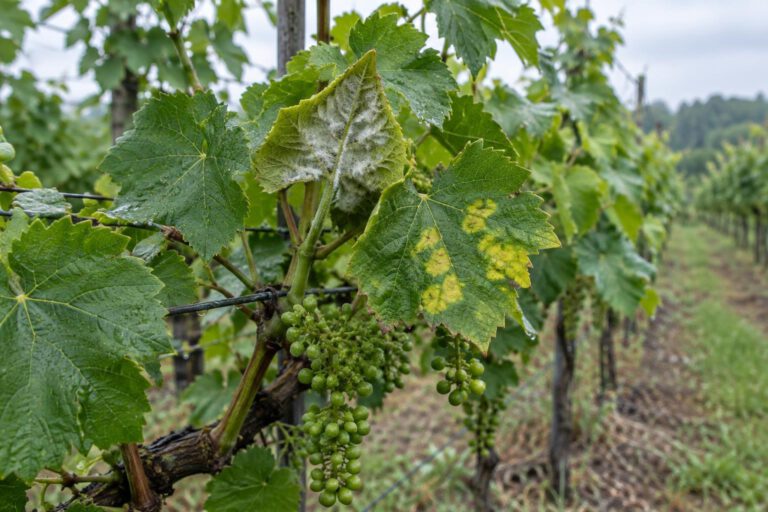
Austrian Wine identifies white Burgundy varieties as an important group in Carinthia; Sauvignon Blanc, Riesling and Traminer are among the other varieties grown. Zweigelt and Blauer Burgunder are also represented. The winegrowers’ association also points to fungus-resistant grape varieties, known as PIWI, and to harvesting by hand. These are different responses to site conditions, ways of working and approaches to crop protection – not merely a regional fashion.
For visitors, talking directly to the winegrowers can make this diversity tangible: which variety thrives on which slope? What does altitude mean for each winery? And which aspects of the work can still be traced in the cellar when the harvest is long over? Good answers connect grape names with specific decisions, rather than reducing Carinthia to a single promise of landscape or flavour.
Check carefully before setting off
The association’s listing gives Carinthia as the venue and the hours as 2pm to 8pm, but provides no individual cellar addresses. It therefore remains unclear whether wineries can conveniently be combined in one itinerary or whether longer journeys separate the locations. Registration, admission charges and any visitor rules should also be checked directly in advance.
This is precisely the practical value of an open cellar day: it can explain a wine region not only through the glass, but as a network of places, altitudes and working practices. For Carinthia, that would be a fitting approach – provided the individual doors and routes are clearly signposted for visitors.
Original reviewed by the editors · 5 November 2026