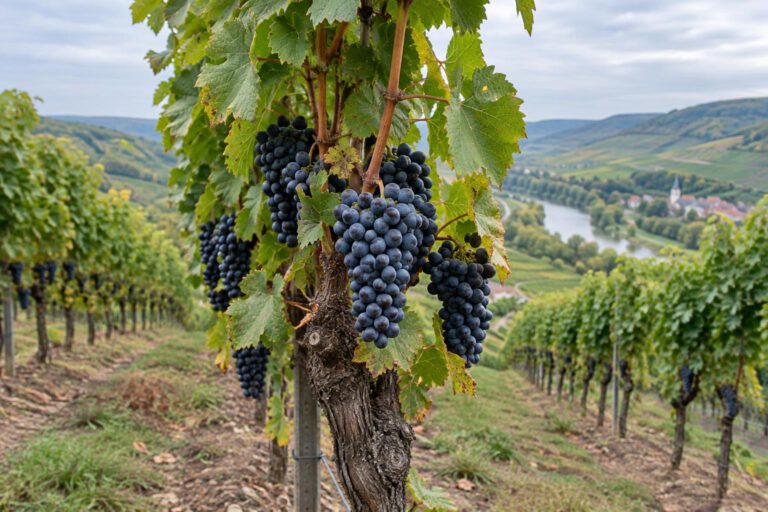
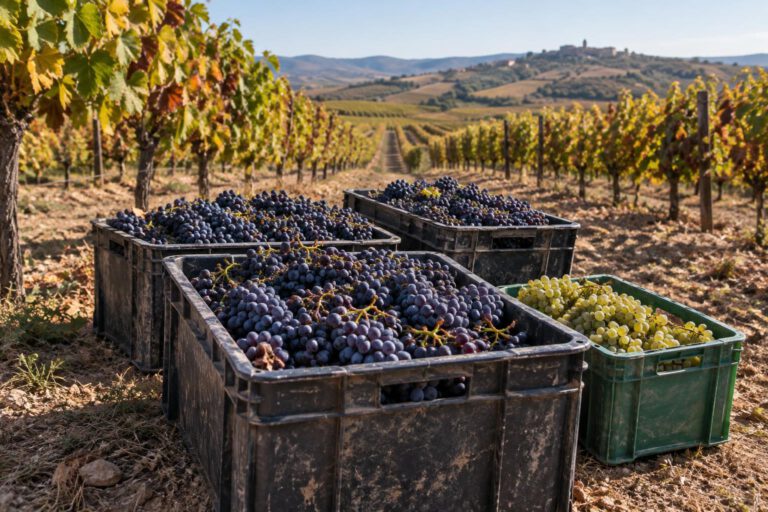
Tannat is not merely Uruguay’s calling card for exports: it also occupies the largest share of the country’s vineyards. Yet the 2025 figures reveal a country whose grape variety profile is considerably broader than the label ‘Tannat country’ might suggest. Alongside the powerful red are white varieties, Bordeaux classics and more recent French crossings – not all on the same scale, but long since more than a footnote.
What the vineyard figures reveal
The annual report from Uruguay’s wine institute, INAVI, records a total vineyard area of 5,798 hectares in 2025. Of this, around 1,536 hectares, or 26.5 per cent, were planted with Tannat. The next most widely planted varieties tell a different story: Moscatel de Hamburgo and Merlot account for just under 995 and 577 hectares respectively; Ugni Blanc occupies just over 581 hectares. Among the red varieties, Cabernet Sauvignon, Marselan and Cabernet Franc follow. Albariño reaches 141 hectares, Sauvignon Blanc just over 143.
The figures put the term ‘diversity’ into perspective. Albariño is a visible part of this development, but not a widespread alternative to Tannat. Marselan, meanwhile, with just under 218 hectares, is no longer an exotic footnote: INAVI puts its share of vineyard area at 3.76 per cent. What appears to be a discovery in international discussions may already play a substantial, if smaller, role in its country of origin.
The Atlantic, not a template
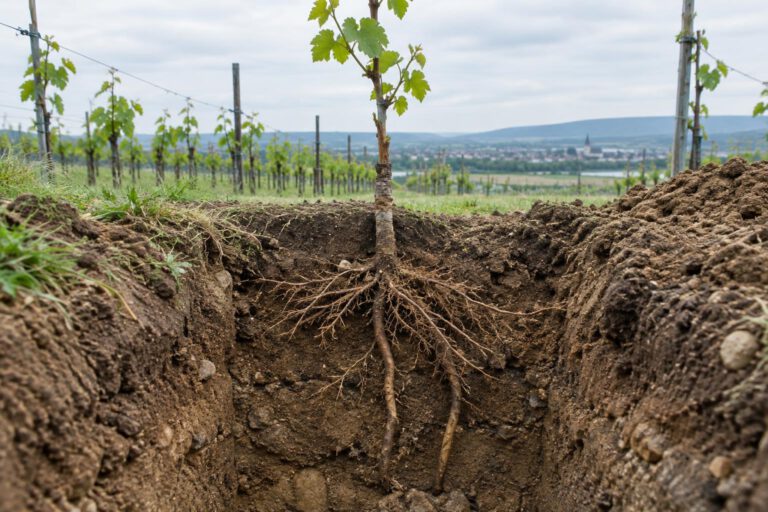
Winegrowing in Uruguay is shaped by a humid, subtropical climate with maritime influence. This does not produce a uniform ‘Atlantic style’: INAVI distinguishes between regions with different temperatures, altitudes and rainfall patterns. The heart of winegrowing lies in the south; in the east, in Maldonado, proximity to the sea and greater geological diversity shape conditions. For growers, a humid climate also demands vigilance in the vineyard: ripening, rainfall and fungal disease pressure cannot be deduced from a grape variety’s description alone.
As a Galician variety, Albariño fits the Atlantic narrative, but geographical kinship is no guarantee of quality. The plot, harvest date and winemaking remain decisive. INAVI lists Albariño as an emerging white variety; wineries such as Garzón grow it in Maldonado. Sauvignon Blanc, Chardonnay and Viognier are also among the white options. They represent different approaches, not a single national flavour profile.
Marselan and the supporting cast
Among the reds, Marselan and Cabernet Franc merit attention. Marselan was created in 1961 by crossing Cabernet Sauvignon with Grenache. The Juanicó winery describes the late introduction of oak in making its Marselan as a deliberate decision – an example of how a variety need not necessarily be treated according to the familiar template of heavy, heavily oaked reds. Cabernet Franc is also relevant: around 204 hectares were on the register in 2025.
This does not mean that these varieties are displacing Tannat. Tannat remains by far the most important red grape variety and shapes international perceptions. It makes more sense to view the other plantings as a complement and as an attempt to express different sites and styles. The vineyard area report measures cultivation, not quality or demand; hectare figures alone cannot crown a winner.
What reaches German-speaking markets
In the German-speaking wine trade, the choice is not merely theoretical. Uruguayan Albariño can be found in German merchants’ ranges, for example; specialist importers also carry wines from the country. This demonstrates availability, but not yet a broad presence in restaurants or specialist wine shops. A single online catalogue cannot show how consistently bottles are available or how actively buyers seek them out.
Uruguay beyond Tannat tunnel vision is therefore not a story about the end of a monopoly. It is a snapshot of a small, diversified wine country: Tannat sets the pace, while Albariño, Marselan, Cabernet Franc and other varieties add tangible chapters of varying scope. Anyone wishing to understand the country should ask not only about its famous red grape, but also where and why other varieties find their place.
Original reviewed by the editors · 5 November 2026