Anyone exploring Portugal’s wine world soon encounters a dense succession of unfamiliar names. Grape varieties, subregions and protected designations of origin are part of its distinctive identity – but on first acquaintance they can feel like a vocabulary test. The Portugal presentation at Zurich’s Expovina, announced for 6 and 7 November, therefore poses a practical question: how can diversity become a guide rather than a challenge?
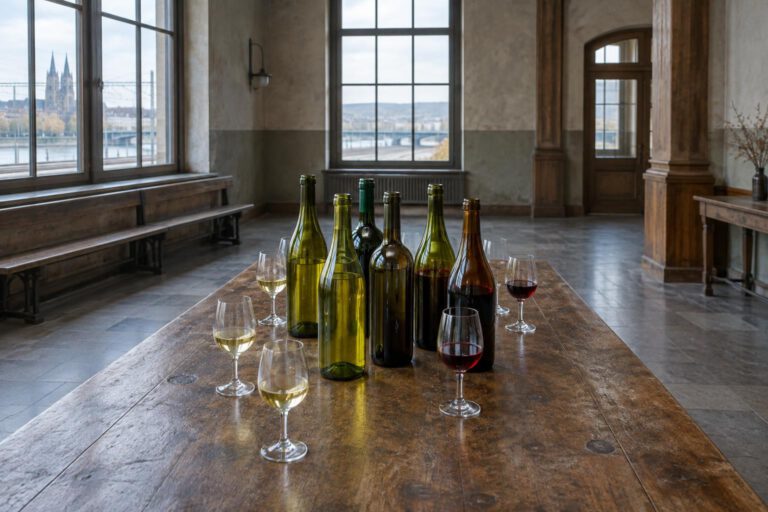
The programme combines open tastings at the Swan Tasting Bar with a masterclass on Friday. The participants are Kopke Group, Fladgate Family Wines and Falua. Expovina lists wines from several Portuguese regions, including Douro, Dão, Bairrada and Vinho Verde. This offers a possible starting point for an explanation: rather than listing as many grape names as possible, show where a wine comes from and what makes that origin distinctive.
A map rather than an avalanche of names
Portuguese wine cannot be reduced to a single style. Even the official classification makes this clear: the Portuguese wine institute IVV lists numerous wine regions on the mainland, as well as Madeira and the Azores; within these regions, different protected designations of origin and geographical indications apply. To find one’s bearings, it is important not to confuse these levels: Douro and Dão name regions, while DOC Douro and DOC Dão, for example, identify their respective protected designations of origin.
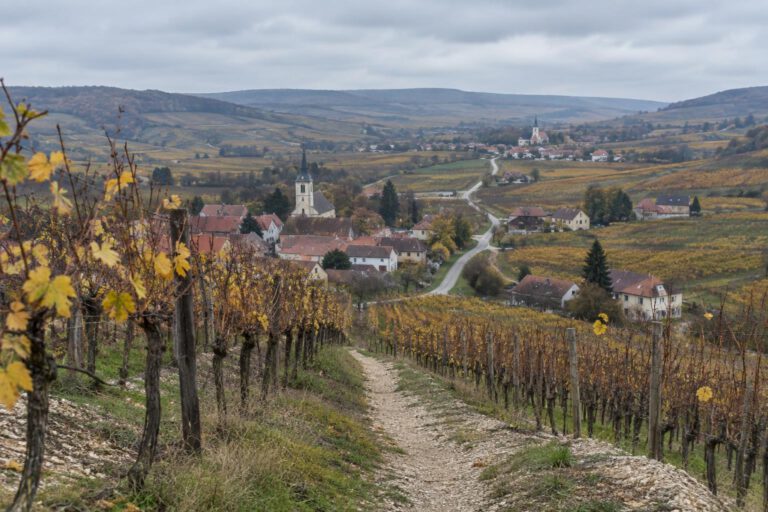
The landscape also helps make sense of the picture. In the north-west, Vinho Verde is shaped by the Atlantic; according to Wines of Portugal, the region is cool and rainy. Further inland lies the Douro Valley, where steep slopes and schist soils define the vineyards. Dão, meanwhile, is surrounded by mountains; its vineyards are scattered among forests and at different altitudes. Bairrada, near the coast, is more strongly influenced by the Atlantic. These contrasts provide a clear framework before turning to individual grape varieties.
Origin explains the difference
For wine educators and producers, this creates a task: do not leave names without context. A variety becomes more tangible when it is clear which region it grows in, what landscape surrounds it and which designation of origin appears on the label. The explanation should not, however, suggest that a wine’s style derives solely from soil or climate. Grape variety, vintage and decisions in the vineyard and cellar also play a part.
How far the Zurich format actually explores these connections in conversation can be observed on site on 6 and 7 November; no account of how the event unfolded is available here. What is confirmed is the programme of tastings on both days and a one-hour masterclass on Friday afternoon. For an audience unfamiliar with Portugal’s wines, even a selection of just a few regions can help: Douro, Dão and Bairrada do not constitute a complete map, but they do represent distinctly different geographical starting points.
A good introduction need not name every grape variety. It should explain how indications of origin work, locate differences on the map and introduce technical terms only when they help make something clearer. Portugal’s diversity is no less extensive as a result – but it becomes easier to read.
Original reviewed by the editors · 6 November 2026