The application deadline has passed. What now happens in cellars and distilleries is not decided by the arrival of a form: first, the authorities check origin, wine type, volume and documentation. Only a formal approval notice clears the way for subsidised distillation. Businesses must then prove that the wine was actually processed and the alcohol used exclusively for industrial purposes.
The measure is intended as a temporary intervention in a market under pressure. It aims to remove older stocks of red and rosé wine from Rheinhessen and Württemberg, diverting them to industrial use rather than drinking alcohol. It is not yet possible to say conclusively how much it will ultimately achieve.
An application is not yet an approval
The EU made a total of €14.16 million available to Germany from its agricultural reserve. Under the national regulation, €10.325 million of this is allocated to Rheinland-Pfalz and €3.835 million to Baden-Württemberg. Red and rosé wines with protected designation of origin from Rheinhessen or Württemberg are eligible; the 2025 vintage and older vintages qualify. The subsidy is 59 cents per litre of wine delivered and distilled. Advance payments are not permitted.
The deadline was 15 October 2026. The responsible authorities are now checking applications and calculating which volumes are eligible. If funding is insufficient to cover all eligible applications, the volume that can be approved will be reduced proportionately. Applicants must be notified of the decision by 30 November at the latest. The wine must not be distilled under the programme before the notice has been received.
On 2 November, the viticulture ministry reported 266 applications in Rheinland-Pfalz, covering a total of 6.3 million litres. This represents around 36 per cent of the 17.5 million litres available there. Approximately 4.7 million litres of this is red wine and 1.6 million rosé. These figures refer to applications, not volumes already approved or distilled. How many would pass the checks remained unclear at that point. No comparable up-to-date figures from Württemberg were available in the sources reviewed.
From tank to distillery
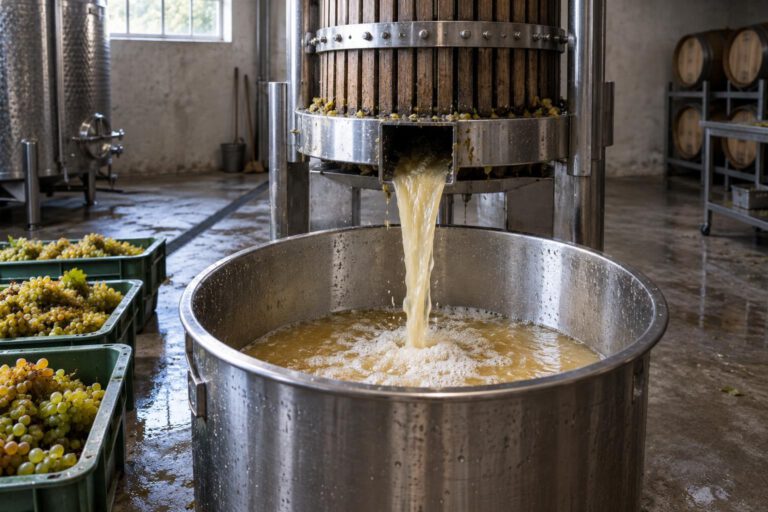
Following approval, the authorised wine is delivered to a distillery. Distillation separates alcohol and water through heating followed by condensation; wine is thus turned into alcohol that can no longer be sold as wine. EU rules restrict its use to industrial purposes, including disinfection, pharmaceuticals and energy. It cannot be used for food or drink, a restriction intended to prevent it from returning to the drinks market by another route.
The 59-cent subsidy is not freely available revenue per litre. This amount includes logistics and distillation costs, which the measure puts at a combined 16 cents per litre. The actual amount a business retains after these costs therefore depends on the transport and distillation involved. The subsidy is paid only once the supporting evidence has been checked.
Evidence, not just a promise
By 1 April 2027, beneficiaries must submit proof of distillation, the volume of alcohol produced and confirmation of its industrial use. Transport and quality-testing documents are also required. The authorities check whether the volume distilled matches the volume approved. If it falls short by no more than a quarter, the payment is recalculated on the basis of the volume actually distilled. If the shortfall is greater, the subsidy rate for the volume actually distilled is halved. Payment must be made by 31 May 2027 at the latest.
For businesses, the measure therefore also involves weighing up the options: a stock of wine is permanently withdrawn from sale, while support is paid only after the process has been completed and documented. Stocks only actually fall when the wine leaves the tank and is distilled. An application alone creates neither cellar space nor liquidity.
Relief with limited reach
The 6.3 million litres applied for in Rheinland-Pfalz fall well short of the available volume. This suggests lower participation than envisaged, but does not explain why individual businesses did not apply or how large their remaining stocks are. Nor can the number of applications yet be used to infer a measurable effect on bulk wine prices or the financial position of individual businesses.
Crisis distillation permanently removes stock from the wine market, but does not automatically address the causes of oversupply. The EU measure specifically targets red and rosé wines from two regions; it changes neither demand nor, directly, production capacity. Only the subsequent approval notices and proof of end use will show how many litres really disappear from stocks. The assessment of the programme therefore begins now, but will only have a firm basis in 2027.
Original reviewed by the editors · 5 November 2026