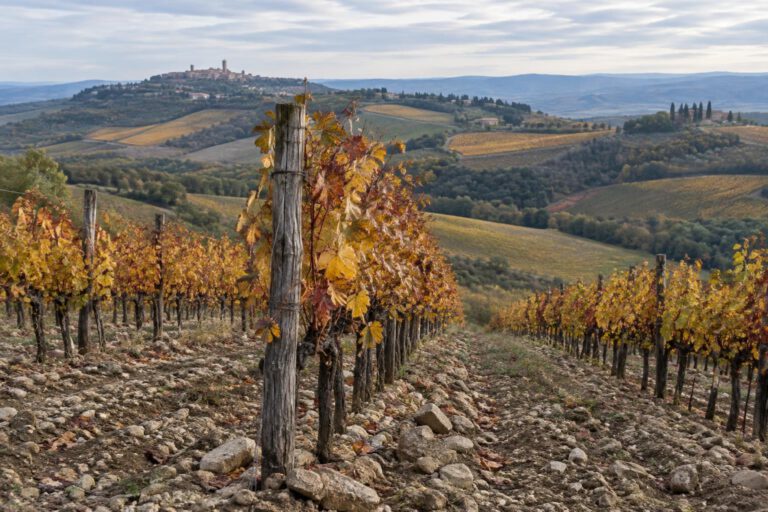
Healthy grapes, but too little water: as early as the start of the harvest on 18 August 2026, the German Wine Institute reported problems with drought, particularly in young plantings. In some cases, grapes were removed to ease the burden on the vines. Older vineyards on soils with low water-holding capacity were also at risk. The report offers a snapshot, but makes one thing clear: grape health and water supply are separate challenges.
That is precisely why the Geisenheimer Rebsortentage (grape variety days) on 27 and 28 August 2026 merit a closer look. The university presented work on PIWI varieties, clones and rootstocks there. These are three approaches that can easily become conflated in discussions about resilient vines, but in fact address different problems.
PIWI: defence is not a water reserve
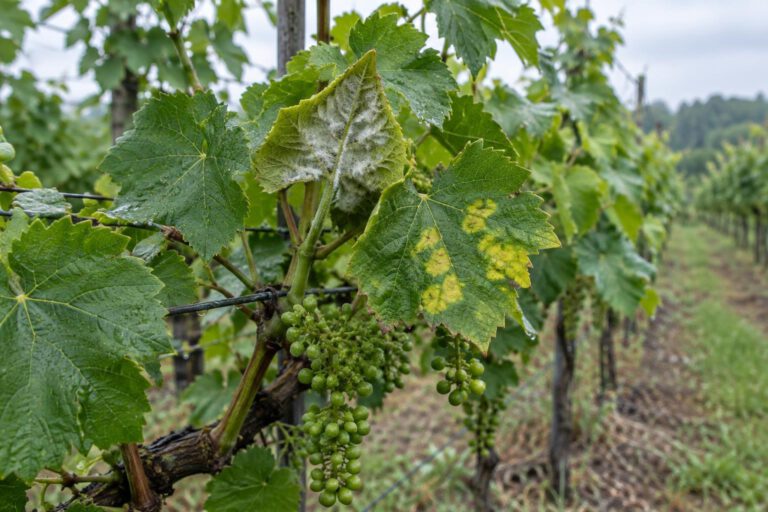
PIWI stands for fungus-resistant grape varieties. Their breeding combines the quality traits of cultivated vines with resistance traits from other vines. The main focus is on powdery and downy mildew. The level of resistance varies according to the variety and pathogen; leaves and grapes can also respond differently.
Resistant does not mean invulnerable, either. The viticultural advisory service in Rheinland-Pfalz also recommends targeted crop protection treatments for PIWIs, partly to preserve their resistance. The benefit lies in reduced inputs, not in a promise of entirely treatment-free cultivation.
The abbreviation, however, tells us nothing reliable about how a vine responds to water shortages. The Julius Kühn Institute explicitly treats climate adaptation as an additional breeding objective alongside fungal resistance. A PIWI variety may be suitable for a dry site, but that trait must be demonstrated separately.
Clones: the same variety, different bunches
Clonal selection works within an existing grape variety. Selected vines are propagated vegetatively, rather than through a new cross grown from seed. It makes use of differences that have arisen, for example, through natural mutations.
Spätburgunder provides a clear example: Geisenheim has developed, among others, loose-bunched and small-berried clone types, as well as those with an upright growth habit. A particular aim was to reduce susceptibility to Botrytis, the pathogen responsible for grey rot. A more favourable bunch structure, however, is different from the mildew resistance bred into a PIWI variety. Nor does it demonstrate drought tolerance.
Rootstocks: the decision below ground
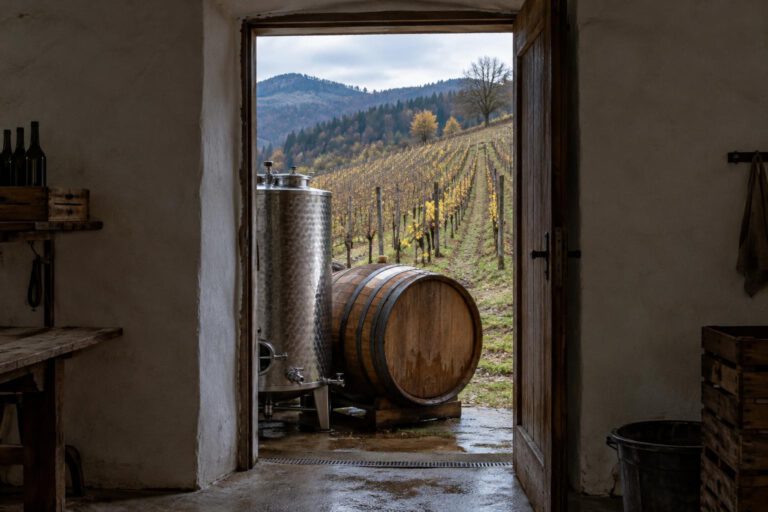
In a grafted vine, the rootstock provides the root system; the scion of the desired wine grape variety sits above it. Rootstocks protect against root-feeding phylloxera, but must also be suited to the soil and water availability.
Viticultural adviser Gerd Götz of DLR Rheinpfalz shows how carefully the choice must be weighed: drought tolerance must be considered alongside lime tolerance, vigour and compatibility with the scion. Ripening is also affected. For an example of a dry, hot Riesling site, he names “5 BB” and “1103 Paulsen” among the possible rootstocks. This is a site-specific assessment, not a ranking of the best rootstocks for dry vineyards.
Assess the site first
A planting decision must therefore take soil characteristics, water availability, lime content, planting density and target yield into account together. This requires comparisons of the proposed variety–clone–rootstock combination over several years under similar conditions. Vine age matters too: Geisenheim is investigating water-stress tolerance in a Riesling trial using the same clone and rootstock, but vines of different ages.
The crucial question, then, is not: which vine can do everything? It is: which problem should it solve here? Different traits can help against mildew, bunch rot and water shortages. Only the right combination turns an individual advantage into a sound decision for the vineyard.
Original reviewed by the editors · 5 November 2026