For Champagne, the 13 per cent limit is not an abstract guideline but part of the rules governing its protected designation of origin. An exemption now applies to a narrowly defined group of wines from the 2026 harvest: they may exceed this limit after the second fermentation. This does not, however, mean that the entire vintage, or Champagne in general in future, may have a higher alcohol content.
The French decree of 22 October 2026 ties the exemption to a specific combination of wines — and to precise cellar records. Translating the rule into practical cellar work comes down to three questions: which vintages are being blended? Have the wines been enriched? And can every individual component of the blend be documented?
An exemption with a clearly defined recipe
The decree applies to wines bottled for secondary fermentation in 2027. It covers blends of unenriched wines from the 2026 harvest and enriched wines from earlier harvests. Only this combination may exceed the otherwise applicable maximum total alcoholic strength of 13 per cent by volume after the secondary fermentation. The provision is therefore neither a blanket increase in the limit for all Champagne nor general permission to enrich wines from 2026.
The distinction between “enriched” and “unenriched” is crucial here. Enrichment means adding fermentable sugar to the must before or during fermentation to increase the eventual alcohol content. The decree specifically refers to previously enriched wines from older harvests that are blended with wines from 2026 which have remained unenriched. The subsequent second fermentation in the bottle produces carbon dioxide and also increases the alcohol content.
The rules do not specify a new fixed maximum above 13 per cent. A figure such as 15 per cent should therefore not be read as a universally permitted new limit. It appears in media reports as a possible level; the decree itself merely states that the limit may be exceeded if the specified conditions are met.
Cellar records, not a blanket provision
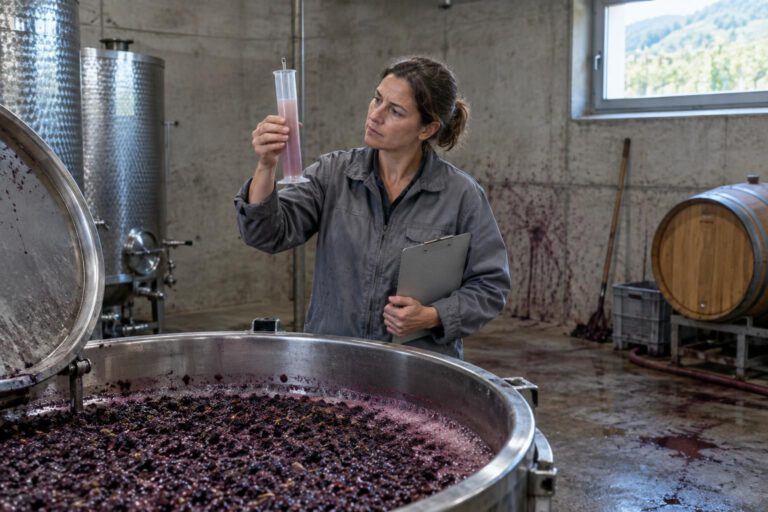
For every vessel whose wine goes into the blend, three details must be entered in the winemaking operations register: its volume, its alcohol content and, where applicable, the extent of enrichment. This makes the exemption a matter of traceability. The details must be attributable to the individual components, rather than simply providing an aggregate figure for the finished cuvée.
In practice, this means that the harvest years alone are not enough. It must also be clear whether each batch has been enriched. Cellar teams and those responsible for documentation must therefore keep their records in a way that allows the composition to be traced afterwards. The decree specifies which data must be entered; it does not prescribe in detail how producers should organise their processes to do so.
The reason: high potential alcohol levels
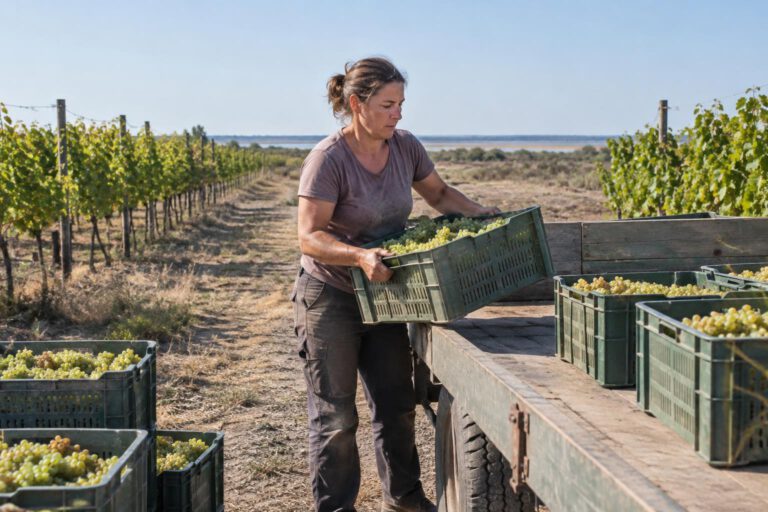
The French regulation justifies the special measure by citing the climatic conditions of summer 2026: heatwaves and exceptional drought had led to particularly high potential alcohol levels at harvest. Here, “potential” refers to the alcohol that can develop through fermentation from the sugar in the harvested grapes — not the actual alcohol content of the base wine or the eventual sparkling wine.
This matters because an exemption from the maximum limit says nothing about the style or quality of a particular Champagne. It governs the conditions under which certain blends may exceed the requirement. Nor does it allow generalisations about all producers or bottles from the 2026 vintage. The wording is restricted to the specified combination and bottling for secondary fermentation in 2027.
No new normal
The 13 per cent rule remains the starting point. This special case shows how the rules governing an appellation can respond to an exceptional harvest without abandoning their requirements across the entire appellation: the wines affected are narrowly defined by vintage, enrichment and blend, while the documentation requirement makes the exemption verifiable.
It remains unclear how many producers will actually use the provision and what alcohol levels the resulting wines will reach. The decree does not answer these questions. For the wine industry, its immediate message is narrower and more specific: not “Champagne may now contain more alcohol”, but rather that certain wines with precisely defined compositions may exceed the limit — provided the cellar records demonstrate that every component meets the conditions.
Original reviewed by the editors · 5 November 2026