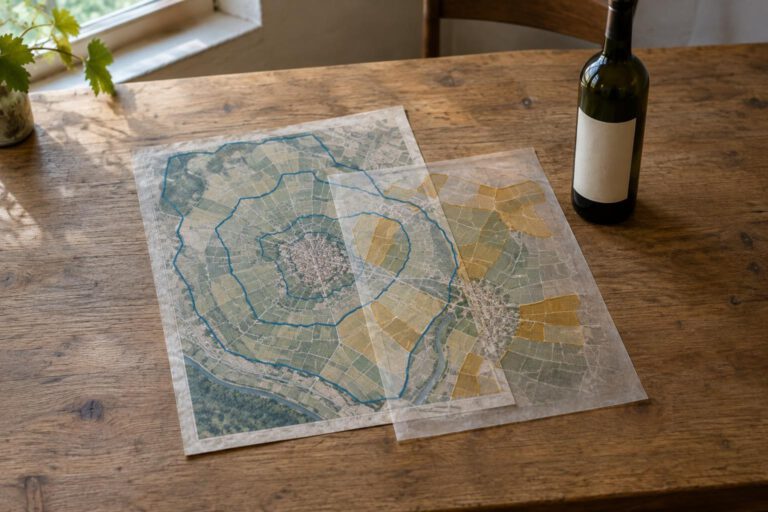
A village name, a vineyard name, plus grape variety and vintage: a German wine label can tell you a great deal. What matters, though, is the geographical area a name actually denotes. A Großlage (a collective vineyard designation) is not the same as an Einzellage (a single vineyard) – let alone a VDP.GROSSE LAGE.
This distinction becomes particularly important with the 2026 vintage. The transitional period for the geographical indications under the origin rules introduced in 2021 comes to an end. Wines up to and including the 2025 vintage may still be labelled under the previous requirements and sold until stocks are exhausted. Old and new labels will therefore appear side by side.
From wine-growing region to vineyard
The reform establishes a more precise hierarchy of origin for Qualitätswein and Prädikatswein (quality wine and wine with special attributes). The basic level is the specified wine-growing region, such as Mosel, Pfalz or Rheinhessen. These names are protected designations of origin, or PDOs. Without a more narrowly defined indication of origin, the grapes may come from anywhere within the respective wine-growing region. “Gebietswein” (regional wine) describes this level; the word does not have to appear on the label as an additional tier designation.
Above this come Bereich (district) or Großlage, then municipality or village, and finally Einzellage. The German Wine Institute associates this with an increasing promise of quality. A more narrowly defined origin is no guarantee that a wine will suit your personal taste, however: geographical classification is no substitute for judging the individual wine.
What “Region” actually means
The most conspicuous signal is the word “Region” placed before a name. If a Bereich or Großlage name is used, it must appear immediately before it – in the same colour, typeface and font size. Here, then, “Region” does not simply mean a wine-growing landscape, nor does it mean the entire wine-growing region.
A Bereich is a defined unit within a wine-growing region; a Großlage groups together several individual vineyards. The additional word makes clear that the name that follows does not refer to a single vineyard. This makes it easier to distinguish between origin names, particularly those that sound similar.
Ortswein and Lagenwein: more than names
If a wine bears the name of a municipality or village as its indication of origin, additional conditions apply. The must or crushed grapes must have reached at least the minimum natural alcoholic strength prescribed for Kabinett: this means the potential alcohol derived from the sugar in the grapes, not the eventual alcohol level shown on the bottle. The wine therefore need neither be called “Kabinett” nor taste sweet. Such a wine from the 2026 vintage may not be released to end consumers before 15 December 2026.
For an Einzellage, the municipality or village name must appear immediately before or after the vineyard name. The Kabinett minimum requirement also applies here. There are also requirements governing grape varieties, laid down in the relevant product specification, the binding set of rules for the protected origin. A single-vineyard wine from the 2026 vintage may not be released to end consumers before 1 March 2027. A vineyard name alone means neither “dry” nor “Großes Gewächs” (a designation for a top-level dry wine).
Distinguishing wine law from association rules
Alongside this sits the classification of the Verband Deutscher Prädikatsweingüter: VDP.GUTSWEIN, VDP.ORTSWEIN, VDP.ERSTE LAGE and VDP.GROSSE LAGE. These are the association’s tiers, not simply alternative ways of writing the statutory levels of origin. Particularly important: VDP.GROSSE LAGE denotes the association’s highest vineyard tier, not a Großlage under wine law.
“Erstes Gewächs” and “Großes Gewächs” also warrant separate attention. The Wine Ordinance amended in 2026 provides for them as quality marks awarded by a dedicated classification committee. Its award rules require approval from the Federal Ministry of Agriculture. A special transitional provision allows the previous rules to remain in use up to and including the 2030 vintage at the latest, but ends earlier once the new rules of procedure and assessment, together with the award requirements, take effect.
The most important order for reading a label therefore remains simple: first the wine-growing region, then the more narrowly defined geographical indication, and finally any association designations or quality marks. This reveals what a label definitively tells you about origin – and what it still leaves open about taste.
Original reviewed by the editors · 5 November 2026