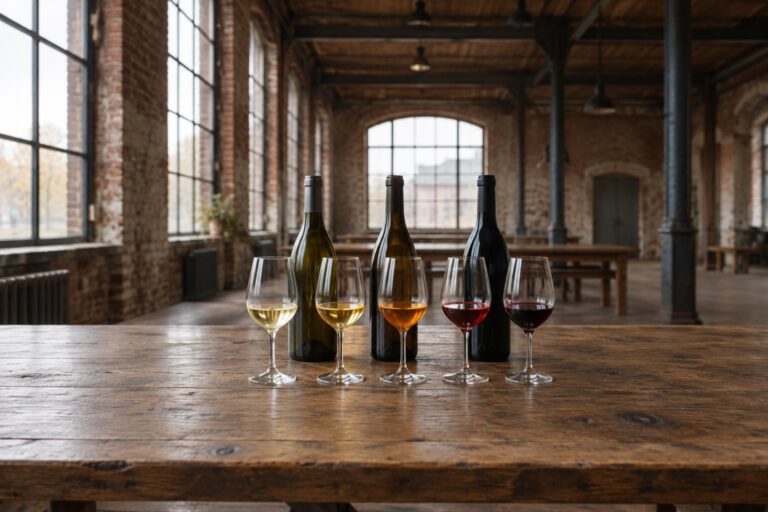
On Friday 6 November, the doors of The Landmark hotel in London will open for the Decanter Fine Wine Encounter. The organiser has announced more than 130 producers from numerous wine-producing countries and over 1,000 wines for the two-day event. There is no reliable way of knowing in advance what questions will be asked there. But the programme sets the scene for visitors to compare origins, maturity and production methods — and for producers to explain what lies behind the label.
The fair is not a neutral cross-section of the wine world: the selection of invited producers and the focus on fine wines already establish a framework. This raises an interesting question for the audience: what information helps people understand a wine, rather than simply categorising it as a familiar name or an expensive bottle?
Origin is more than a place name
The tasting brings together established European regions and producers from countries such as Argentina, Australia, Chile, Hungary and New Zealand. Visitors moving from Bordeaux to Mendoza or Tokaj at a tasting table can ask about the conditions that shape a wine: what role do climate and soil play? Which grape varieties are permitted or typical? How great is the influence of the vineyard site — and how much of it can be discerned in the wine itself?
An indication of origin does not automatically answer all these questions. It may designate a clearly defined region, but on its own it says little about how an estate operates or what decisions were made in the cellar. In conversations with producers, it therefore also matters what a statement is based on: a particular plot, a traditional method or a personal assessment of the vintage.
Maturity needs comparison
The value of comparison becomes particularly clear in the “Cellar Collection”. According to the organiser, 21 producers will each present three vintages of a top wine side by side, including mature bottles from their cellars. Such a line-up can show how a wine has developed over time. It is not, however, a guarantee that every bottle will mature in the same way or that a particular timescale applies to every vintage.
The obvious questions are specific: which vintages are approachable now? How have the bottles been stored? What is the case for waiting longer — and what does the producer base that assessment on? A considered answer acknowledges uncertainties. Ageing potential is not a quality that can be inferred from prestige or price alone.
Explaining price, not justifying it
At a fair featuring many well-known estates and limited-production wines, price also belongs in the conversation. What does the work in the vineyard cost, what volumes are produced, and how long is the wine matured and stored? What roles do distribution, demand and rarity play? These are distinct factors, not an automatic formula for quality.
Explaining a high price by pointing to a famous name is not enough to communicate effectively. Equally, a low price alone does not prove that a wine is particularly approachable or simply made. Asking how prices are set can prompt producers to distinguish between the work involved, market positioning and actual origin.
Conversation as part of the tasting
Alongside the main tasting, the Fine Wine Encounter offers themed masterclasses and small winemaker dinners. They differ in how much time is available for questions: exchanges at the tasting table are brief, while a moderated seminar can compare vintages or production methods more systematically. The format therefore influences which answers are possible at all.
The crucial thing to observe over the coming two days will be whether the conversation moves beyond standing and reputation. Origin becomes understandable when producers describe specific conditions; maturity, when it offers comparison rather than promises; price, when the work involved and market forces are kept distinct. That can only be assessed on site. Until then, the most important question remains open: what information are visitors looking for — and what can the people behind the bottles actually tell them?
Original reviewed by the editors · 5 November 2026