Anyone who takes origin seriously must not confuse it with immutability. For me, that is the thought connecting our articles this week. Planting a different grape variety, using technology, giving up vineyard land: each of these decisions can look like a break with the past. But whether it harms a wine culture or gives it a future is not determined by how familiar it feels to us.
I would therefore like to see origin less as an obligation to carry on as before. It is an obligation to justify our choices. Why this vine in this place? Why this amount of work? And for what wine, for which people, should that work be done? This demands more than loyalty to a familiar label. It demands that we continually reassess the relationship between landscape, craftsmanship and economic viability.
The right vine is not a business plan
“Fungal resistance is not drought resistance: which vine for which problem?” brings this task into sharp focus. Resistance to fungal diseases does not automatically answer the question of water. Grape variety, rootstock – the root-forming part of the grafted vine – and vineyard management must work together. Reducing this to a search for a supposedly future-proof variety oversimplifies the problem.
I read our article on Merlot in Germany in much the same way. Warmer years are not a sufficient business plan. Choosing an international variety is neither necessarily a loss of individuality nor automatically a sign of intelligent adaptation. What matters is whether it suits the site and the direction of the business. For me, origin is expressed not by rejecting everything new, but through well-founded decisions rooted in a particular place.
The same applies to machinery. Our look at vineyard technology asks which tasks it actually eliminates and which remain manual. This is precisely the clear-headed approach I would like to see in the debate about the future. Equally important are the limits to what can be transferred: what seems sensible in the island conditions of La Gomera may be wholly unsuitable for a German wine business. Learning does not mean copying.
Less, too, can be a choice for the future
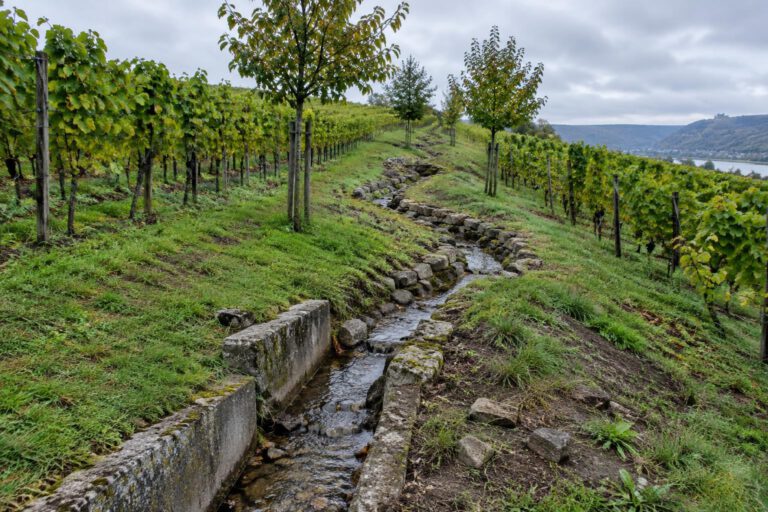
This idea becomes most uncomfortable when it comes to vineyard area. The grubbing-up premium in Rhineland-Palatinate encourages growers to give up productive land and also has implications for planting authorisations. This is not simply an adjustment to a number. Our article “When reducing vineyard area becomes a business strategy” thus raises a question that cannot be answered romantically: must preservation always mean continuing to cultivate everything?
The strongest objection deserves respect. A wine landscape is more than the sum of individual business accounts. Anyone who looks only at costs risks losing sight of what makes a region distinctive. Less land under vine must therefore not be casually declared a universal model for the future. But I find the opposite no more convincing: imposing on a business a cultural duty to hold on to every parcel. Preservation needs viable businesses, not merely good intentions.
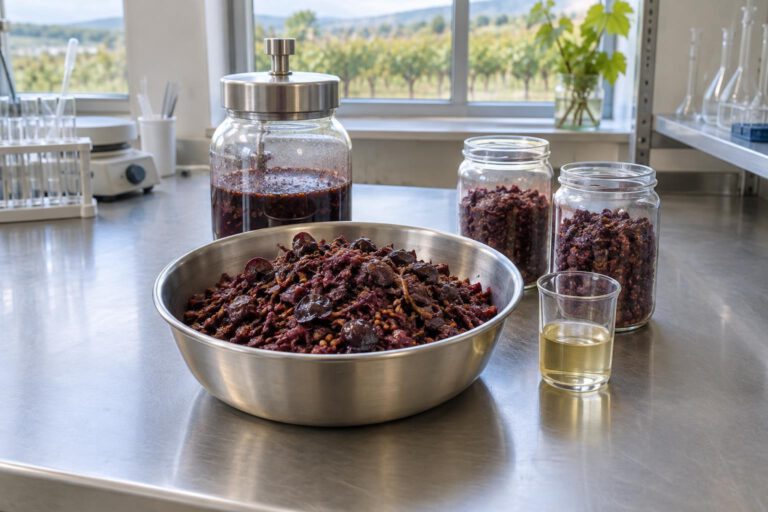
The same standard should apply to alcohol-free wines. The AROMAnoALK project in Geisenheim is investigating how grape pomace might contribute to aroma extraction. That does not yet amount to a firm promise of quality. It does, however, give us a reason to assess such products seriously rather than excluding them from wine culture before examining them.
My conclusion from this week is therefore not a call for innovation at any price. I would like to see a wine sector that neither celebrates nor resists changes before it has understood their consequences. Origin should be the benchmark for that assessment, not an argument for cutting it short. Preservation would then mean making reasoned decisions about what should remain – and what must change so that it can.
Original reviewed by the editors · 5 November 2026