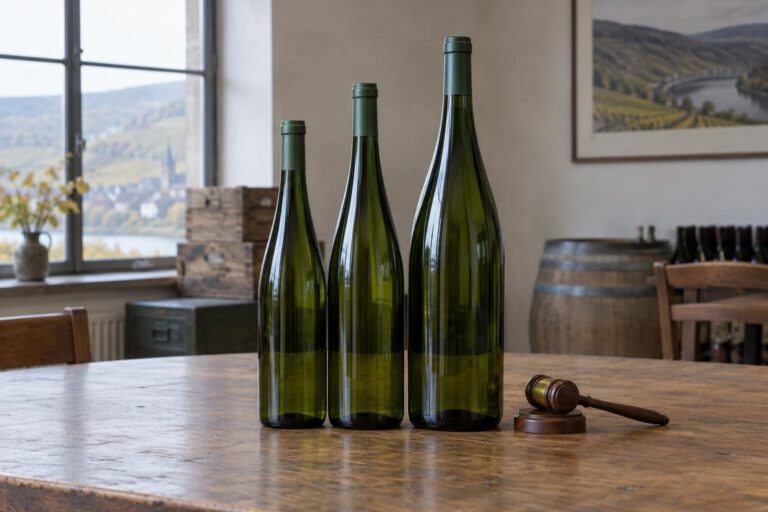
The list is long and strikingly consistent: Riesling, vineyard site, vintage – still wines time and again, alongside a few large formats and rarities. Yet among the 30 lots at the VDP auction in the Nahe on 7 November are two that break the pattern. Gut Hermannsberg is putting its 2019 Riesling Sekt (sparkling wine) from Kupfergrube up for auction in two bottle sizes.
This is not a second auction within the first, but a sparkling wine offering within a catalogue dominated by still wines. It is precisely this position that makes the Sekt interesting: it broadens the selection not through a new grape variety, but through a different way of presenting Riesling and its origin.
Two lots, one origin
The lot list names the Sekt as “2019 Kupfergrube Schloßböckelheim Riesling Sekt extra brut”, designated VDP.SEKT PRESTIGE. Lot N3 comprises 360 bottles of 0.75 litres each. Lot N4 offers twelve magnums of 1.5 litres each. These are not merely two packaging options: the larger format offers the same product in a different bottle size, without the catalogue presenting it as a separate expression of style or vintage.
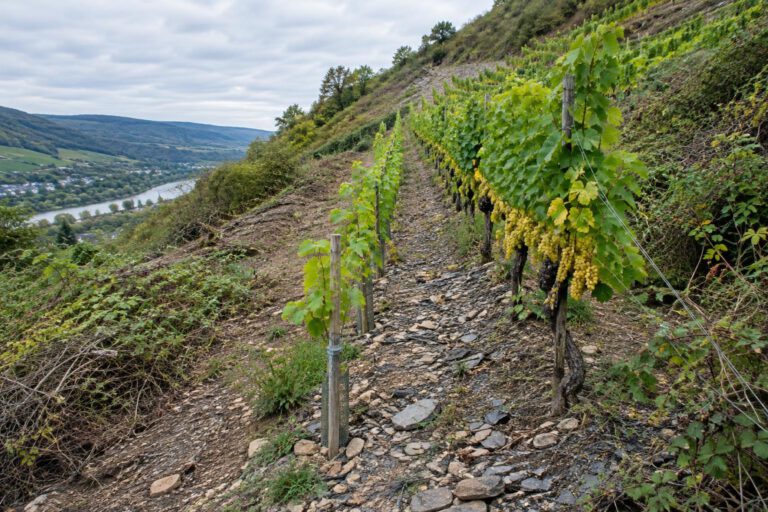
The lots also have a clearly defined geographical identity. “Kupfergrube” is the indication of origin in the name; the winery is based in Niederhausen in the Nahe. The auction catalogue lists the 2019 vintage and the designation Extra Brut for both lots. The current lot overview contains no details of how the Sekt was made, its ageing period or its sensory profile. The information therefore provides no basis for a tasting assessment ahead of the auction.
Sekt alongside still wines
The contrast is clear in the catalogue: the Sekt is followed by numerous still Rieslings, including dry wines, Große Gewächse (top dry wines from classified vineyards), a Beerenauslese (a sweet wine made from individually selected berries) and other rarities. Large formats also feature several times – among Rieslings from Dr. Bürklin-Wolf, Emrich-Schönleber and K. F. Groebe, for example. The Sekt is therefore not simply competing with still wine; it sits within an offering that juxtaposes origin, vintage, maturity and bottle size in various ways.
For the organiser, the auction is part of a long Bad Kreuznach tradition: the VDP points to a history dating back to 1912. According to the association, 14 wineries from the Nahe, Ahr, Rheinhessen and Pfalz are taking part in 2026. The pre-auction tasting is scheduled for 9am to 11am at the Museum Römerhalle; the auction with tasting begins there at 1pm. The association says the wines will be poured in the room as they come up for bidding.
An addition, not a verdict on the market
The 2019 Sekt occupies a small but clearly distinctive place in the catalogue: two lots, one vineyard site, one vintage, two bottle sizes. This adds a sparkling wine offering to the auction without changing the fundamental character of the selection. Whether this distinctive format and the large bottle resonate with bidders will only become clear on 7 November. For now, all that can be said is that the Sekt does not disappear into the lot list as a footnote, but stands as a product in its own right alongside the still Rieslings.
Original reviewed by the editors · 5 November 2026