Six wineries in Andau are inviting visitors to their Weinherbst event on Sunday, 8 November: cellar doors will be open from 10am to 6pm, with a shuttle connecting the wineries. The programme includes tastings and insights into the estates. The advertised admission charge is 50 euros; according to the organiser, this includes an entry ticket and a wine purchase voucher worth 30 euros. Payment is in cash on arrival.
An open cellar promises a closer connection: to the work behind the wine, to the people who make it, and to questions that can easily get lost as glasses are poured. But that promise does not amount to a complete look behind the scenes. What visitors learn depends on which wines are presented, who has time to talk – and what they themselves want to know.
A question to start the conversation
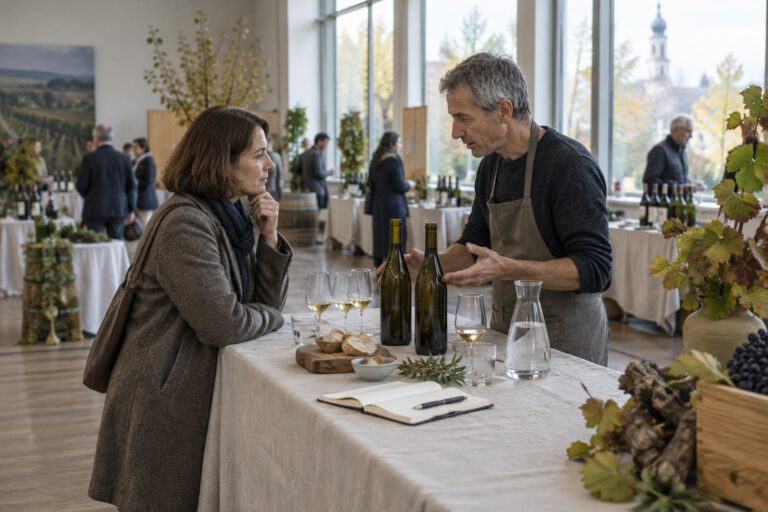
The six participating wineries are Weingut Jacqueline Klein, Weingut Hannes Reeh, Scheiblhofer, Schwarz, Wilhelm Thell and Zantho. Rather than simply moving from stand to stand in search of a favourite wine, it is worth bringing a question of your own. For example: when were the grapes picked – and what determined the timing? Were they harvested by hand or machine? How did fermentation go, and what decisions were made during maturation?
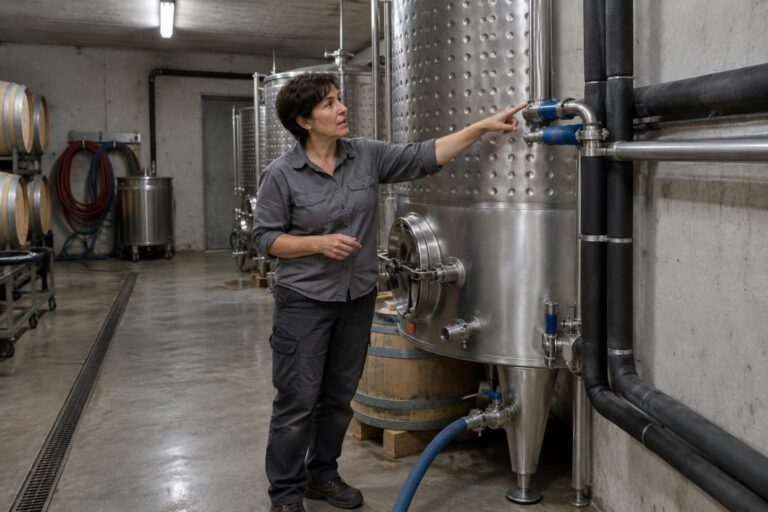
Specific answers can reveal how differently wines are made. A barrel, however, does not speak for itself: the type of wood, barrel size, age and length of maturation only gain context through conversation. Equally, a wine on offer does not automatically tell you anything about the entire range or vintage. The tasting is the winery’s selection – not its complete archive.
What the pour does not tell you
Between the glass and the sales table lies much that is not immediately apparent: harvest conditions, the work involved, decisions in the cellar, but also financial pressures and the question of which wines are not being poured. Anyone wishing to compare can ask about the grape variety, vintage and maturation method, and note down the answers for later. If details are not provided, that too tells you something about the limits of the format.
A purchase voucher is explicitly part of the admission package. That does not make the day any less interesting, but it makes the context clear: tasting and shopping are linked. No one is obliged to turn a conversation or tasting into a purchase. An open cellar can offer insights; it is no substitute for either a comprehensive winery tour or an independent assessment of the wines.
From winery to winery
The organiser lists a shuttle between the wineries; an option for travel from Vienna and back is also advertised. This makes it possible to plan a tour of several cellars without having to arrange every journey yourself. According to the organiser, an afterparty at Scheiblhofer, “The Hall of Legends”, follows from 6pm to 11pm, with free admission.
Anyone wanting to make the most of the day can start small: listen first, then ask specific questions, and finally compare only the wines that genuinely interest them. In this way, an open cellar becomes more than a series of tasting stations – a conversation about decisions that usually remain invisible in the finished glass.
Original reviewed by the editors · 7 November 2026