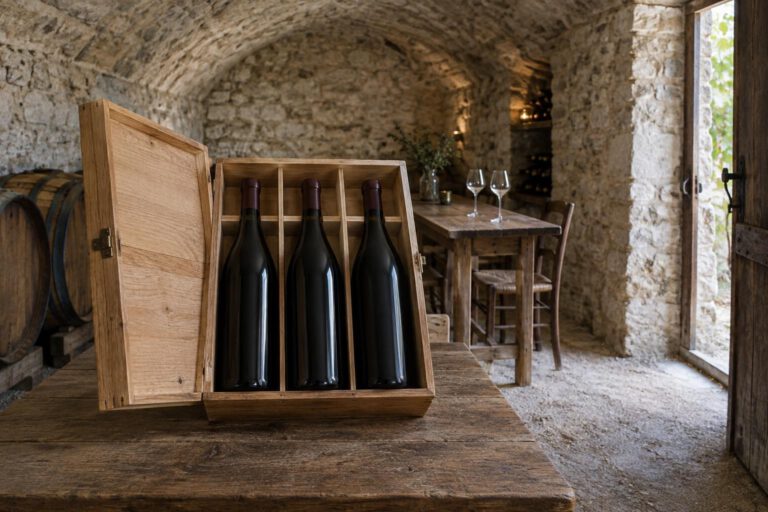
On Sunday, 15 November 2026, the wines of the Hospices de Beaune will go under the hammer in the Burgundian town’s covered market. The Hospices Civils de Beaune have announced a 2.30pm start; this will be the 166th edition. The new vintage has yet to go under the hammer. What can usefully be prepared now is a yardstick for the figures that follow: a large total alone says little about demand and price trends.
According to a statement from marketing partner Albert Bichot, 432 barrels and two smaller half-barrels are planned for 2026, in addition to the charity barrel. The final lot list and the scope of its categories should be checked against the official catalogue before results are published. The volume already announced makes clear why absolute proceeds from different vintages cannot simply be compared directly: fewer barrels on offer can depress the overall total even when individual hammer prices rise.
Clarify the units first
A barrel, the Burgundian “pièce”, usually holds 228 litres – equivalent to 304 bottles of 0.75 litres, before losses during maturation and bottling. Half-barrels, spirit lots and special lots must not be counted together without explanation. A comparison therefore requires at least three details: the number and type of units auctioned, their contents and the hammer price per standard barrel. For half-barrels, the price should be converted to a full-barrel equivalent or reported separately.
The composition is equally important. The Côte de Beaune and the Côte de Nuits, white and red wines, Premier Cru and Grand Cru appellations represent different lots. An average across all barrels will shift simply if the proportions of these groups change. Separate averages by colour and appellation or quality category are more informative, each accompanied by the number of barrels included. Nor is an average price the price of a typical wine: top lots can have a substantial effect on it.
Hammer prices are not total proceeds
For 2025, the BIVB reported an average hammer price of 33,930 euros per barrel for red and white wines, excluding spirits and the charity barrel. Hammer prices totalled 18,754,670 euros, while the overall amount including buyer’s premium was 20,223,043 euros. The charity barrel fetched 400,000 euros and, according to the results report, was the only lot on which no buyer’s premium was charged. These figures therefore cannot be fitted into a single, self-explanatory sales column.
For 2026, results lists should show buyer’s premium and hammer prices separately and make clear which lots are included in each total. Only then is it possible to tell whether a reported total covers the bids themselves or also includes buyer’s fees. The specific auction conditions for the current year must be confirmed before publication; a fee rate cannot be inferred from the previous year’s figures quoted here.
Charity as a separate measure
The “Pièce de Charité”, also known as the “Pièce des Présidents”, is a separate lot with its own purpose. Its proceeds should neither be included in an average barrel price nor incorporated without explanation into a figure indicating market trends. According to the Hospices Civils de Beaune, a charity barrel has been announced for 2026; the Hospices wine estate describes its proceeds as supporting one or more selected associations. The specific allocation and lot details should form part of the results checks.
Nor should ordinary auction proceeds be equated with the proceeds from this special lot: according to the Hospices, they support the institution and its facilities, among other purposes. A charity auction can thus both reflect wine prices and raise funds for other purposes – but these two functions require different measures.
What a comparison can tell us
A robust year-on-year comparison therefore makes its basis clear: barrel numbers and volume, hammer price per barrel, buyer’s premium, total proceeds and the charity lot – with explicit inclusions and exclusions. This also requires a breakdown by wine type and appellation, together with a note on changes in volumes. Only then can there be a cautious discussion of whether bidding has shifted in the market or whether it was primarily the supply and mix of lots that differed. The fall of the hammer on 15 November will produce figures; their significance will emerge only through an appropriate comparison.
Original reviewed by the editors · 7 November 2026