A mature wine can deepen the story of its origin – or reveal its limits. Wine changes over the years; vintage, grape variety and decisions in the cellar also remain part of its development. Anyone seeking to understand what a Styrian Riede contributes to a wine should therefore look beyond the age of the bottle to comparisons and verifiable estate records.
A presentation of Styrian Riedenweine and mature wines has been announced for 18 November 2026 at Palais Ferstel in Vienna. The occasion provides a useful setting for questions that go beyond ‘I like it’: What exactly does the origin stated on the label refer to? What changed between vintages? And which decisions during harvesting and maturation might explain the differences?
What Riede means
In Austria, ‘Riede’ is the term for a single vineyard site. In Styria, the DAC system – the protected designation of origin for quality wines typical of their region – divides wines into regional, village and single-vineyard wines. Riedenwein comes from a named site and forms the top tier of this three-level origin pyramid. The name identifies a place of origin first and foremost, not automatically a uniform taste.
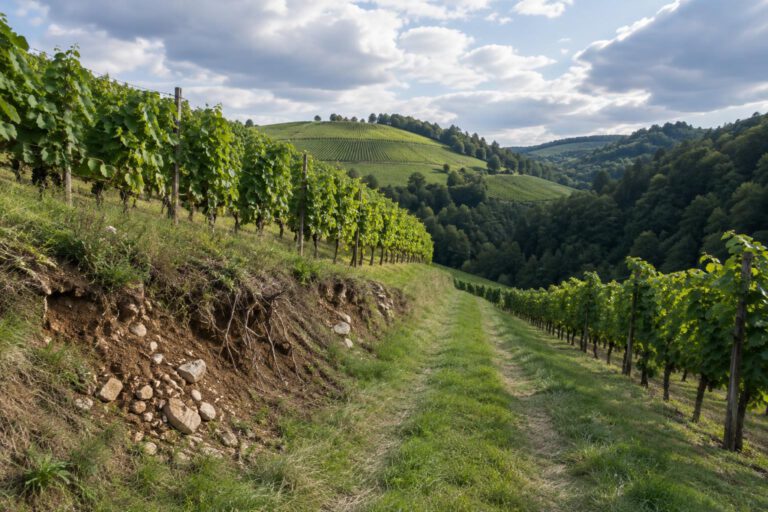
This matters because a Riede does not prescribe a particular cellar technique. Soil, geology, climate and aspect – the direction the vineyard faces – are among the factors used to describe a site. Grape variety, vine age and vineyard management also play a part. During winemaking, factors such as harvest timing, pressing, fermentation and maturation influence how the raw material expresses itself in the wine.
The legal framework also requires closer reading than a vineyard name alone. Austria’s wine labelling regulation sets out specific requirements for the designations ‘Erste Lage’ and ‘Große Lage’ (first-class and great vineyard sites), including classification, hand harvesting and specified submission deadlines. These terms are not simply synonyms for every Styrian DAC-Riedenwein.
Maturity is no guarantee of origin
Wines change as they mature in bottle. Exactly how depends, among other things, on vintage, grape variety, the wine’s composition, closure and storage conditions. An older bottle can therefore offer interesting clues about development and longevity. On its own, however, it does not prove that a particular impression comes from the Riede.
A meaningful comparison starts with conditions that are as similar as possible: the same grape variety and origin, comparable fill levels and documented storage. Comparing several vintages side by side is even more helpful. This makes it easier to identify which characteristics recur and which are more closely linked to a particular harvest year or to maturation. Even this comparison offers no simple formula: vintages are not identical, and every wine is the result of multiple influences.
Questions for the producer
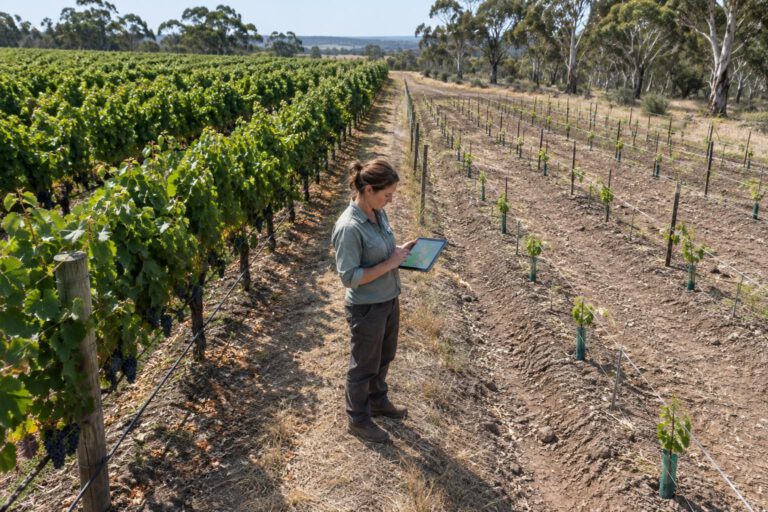
When talking to producers, it is worth looking at the records: are there records for individual vineyard parcels, details of soil and aspect, harvest timing and yield? Were the grapes fermented spontaneously or with added yeast? Which vessels were used, how long did the wine remain on its lees, and when was it bottled? Such questions turn origin into a verifiable production history, rather than leaving it as merely a word on a label.
What cannot be answered matters too. A tasting can reveal differences between bottles, but it cannot replace a soil analysis. A sequence of vintages may suggest recurring traits, yet individual bottles and their storage remain potential confounding factors. And where estate records are missing, an interpretation should be identified as a hypothesis.
Mature Riedenweine are thus less a ready-made proof than a test: they allow claims about origin to be examined through time and comparison. The more precisely vintage, maturation and storage are documented, the more robust the answer becomes – and the clearer it remains what is still unresolved.
Original reviewed by the editors · 7 November 2026