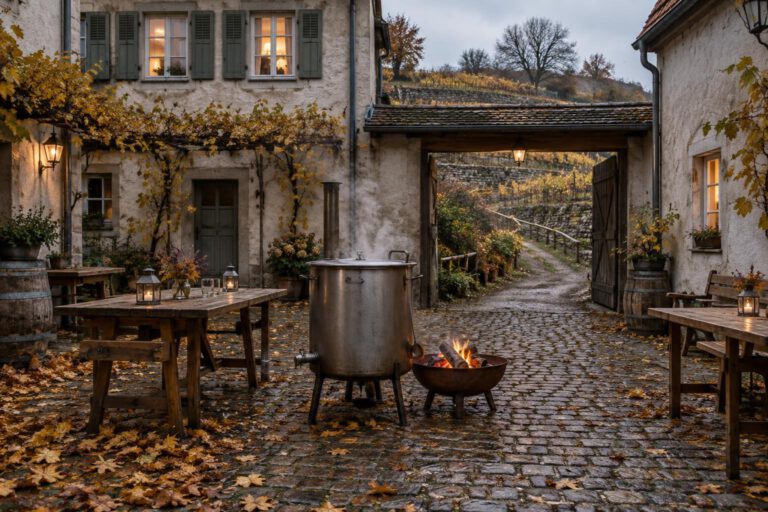
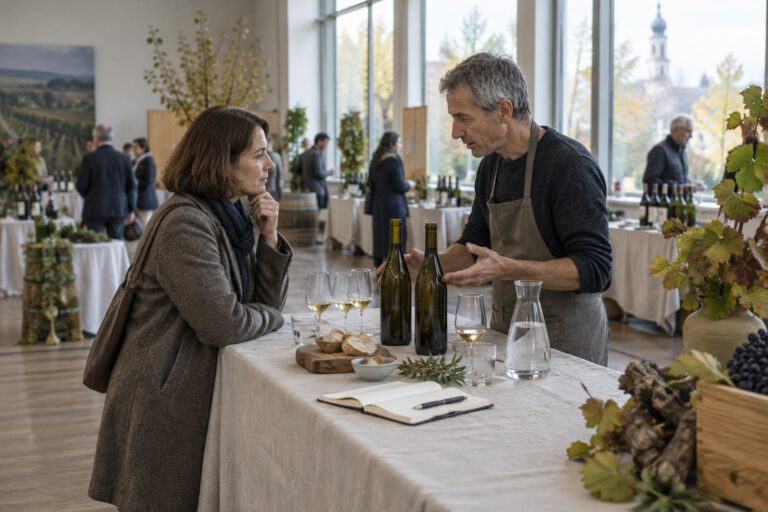
A cellar visit can be more than a look at barrels and bottles: it can reveal how an estate works – and where its environmental ambitions end. That is not the same as a quality seal. EU organic rules set verifiable requirements for grape growing and winemaking. They do not automatically tell you whether a winery also saves energy, uses water carefully or welcomes visitors sustainably.
On 23 November 2026, Hochschule Geisenheim University will present findings and recommendations for action from its research project on organic wine tourism at a hybrid closing event. The project ran from October 2023 to September 2026. Its intended scope included examining the perspectives of wineries, visitors, associations and tourism professionals. Exactly which recommendations will ultimately be presented remains an open question until the event. Even now, though, we can ask what makes a cellar visit informative: not an abundance of green buzzwords, but whether guests can understand specific processes and put claims into context.
The seal is a starting point, not an all-round verdict
For wine, “organic” is not an arbitrary promise. Wine labelled as organic is subject to EU regulations: the grapes must be organically grown, and certain winemaking processes and substances are also regulated. Certification therefore provides a reliable starting point – but not proof that an estate operates sustainably in every respect.
Anyone taking a broader view of sustainability should break it down into individual questions. How is the soil between the vine rows managed? What measures help keep the vines healthy? What happens to grape pomace, lees and packaging materials? How much energy do cooling and bottling require? There is rarely a single figure that answers all these questions. The picture becomes meaningful when a winery specifies its aims, processes and limitations.
The explanation begins in the vineyard
A tour need not be a lecture. It can show why an estate maintains cover crops, how it manages rainfall or what crop protection measures are needed. What matters is explaining the context: what is being done, to what end – and what conclusions cannot be drawn from it? Ground cover alone is no proof of overall environmental performance. Nor does a single measure tell you how the entire estate operates.
Good communication does not gloss over trade-offs. Organic viticulture does not mean that vines grow without intervention. Disease and weather place constraints on estates; depending on the year, vineyard work can be particularly demanding. A factual account therefore also explains what cannot be planned and the decisions that follow from this.
What the cellar can tell us
In the cellar, grapes become wine – through decisions about fermentation, temperature, stabilisation and bottling. Guests can understand this when the different stages are not simply shown but their functions explained. Why is a tank cooled? Why does a wine go into a barrel? Which steps are mandatory, and which are the estate’s own decisions? A tour need not reveal trade secrets. But it should distinguish between legal requirements, organic rules and voluntary measures.
Verifiable examples are helpful: a named process, a clear objective, a timeframe or a figure, if the estate has collected the data. Simply stringing together terms such as “close to nature”, “climate-friendly” or “in harmony with nature”, by contrast, remains vague. That is not automatically evidence of false claims – but it is a reason to ask politely what exactly is meant.
Sustainability does not end at the cellar door
Wine tourism also includes the journey there. An organic winery can explain to guests whether bus and rail connections are accessible, whether tours are grouped together, or how food, water and waste are managed during a visit. Here, too, a single good solution is no substitute for an overall assessment. Nor should an estate give the impression that a visit is environmentally sound simply because its wine is certified organic.
A simple yardstick is useful for guests: is a claim explained in specific, understandable terms, without evasion? Are limitations acknowledged too? Can visitors distinguish between certification and broader sustainability ambitions? A successful cellar visit does not promise a flawless environmental record. It makes the work visible, invites factual questions – and leaves unproven matters unresolved.
Original reviewed by the editors · 7 November 2026