A bottle goes under the hammer; a vineyard faces an uncertain future. Between these two decisions lies, for me, the central thought of this week in wine. According to the VDP, 30 lots from 14 wineries are due to be auctioned in Bad Kreuznach on 7 November. At the same time, Rheinland-Pfalz is offering winegrowers the prospect of a payment for permanently grubbing up productive vineyards. This is not a contradiction. These are different views of the same industry.
Our articles from 29 October to 5 November suggest an uncomfortable distinction: attention for wine is not the same as an economic foundation for winegrowing. I think it is a mistake to treat one as proof of the other. Anyone who wants to preserve provenance and craftsmanship must also discuss which work can still pay its way, and under what conditions.
The exception is not the benchmark
“What the hammer price reveals – and what it does not” asks the right question. A bid shows what a particular wine is worth to those bidding for it. It does not tell us how reliably a winery can sell its other wines. The selected bottle may be sought after without allowing any robust conclusions about the market as a whole.
The strongest counterargument deserves respect: outstanding wines can draw attention to a region. Awards can spark curiosity, and auctions can keep exceptional achievements in the public eye. A wine industry without such attractions would not automatically be fairer or more stable. But prestige is no substitute for broad-based demand. A high hammer price does not in itself provide an answer to the cost of an hour’s work in the vineyard.
That is why “When reducing vineyard area becomes a business strategy” strikes me as a necessary counterpart. The Rheinland-Pfalz Chamber of Agriculture cites reducing production potential and easing pressure on the market as the aims of the announced grubbing-up support. Having less land under vine must not be too hastily read as a personal failure. It can be a decision that allows a grower to put the work that remains on a sound economic footing in the first place.
Provenance needs room to manoeuvre
Of course, the case against grubbing up vines rests on more than sentimentality. Anyone who thinks about wine in terms of its origins cannot regard vineyards solely as production capacity. Landscape, skills and regional character are bound up with them. I therefore want neither to defend every plot at any price nor to treat its loss as a simple matter of fact. What matters is the outlook left to the grower – not whether their decision fits a narrative of progress or decline.
The same yardstick connects our articles on Merlot in Germany and labour-saving vineyard technology. The international grape variety is not the right choice simply because warmer years make it a possibility. A machine does not ease the burden simply because it takes over a task. What matters is what works at the particular site, what manual work remains and whether the outcome suits the business.
That sounds less promising than the next big solution. Yet that is precisely its strength. Adaptation is not a departure from provenance. It can be a prerequisite for preserving it.
Progress must deliver
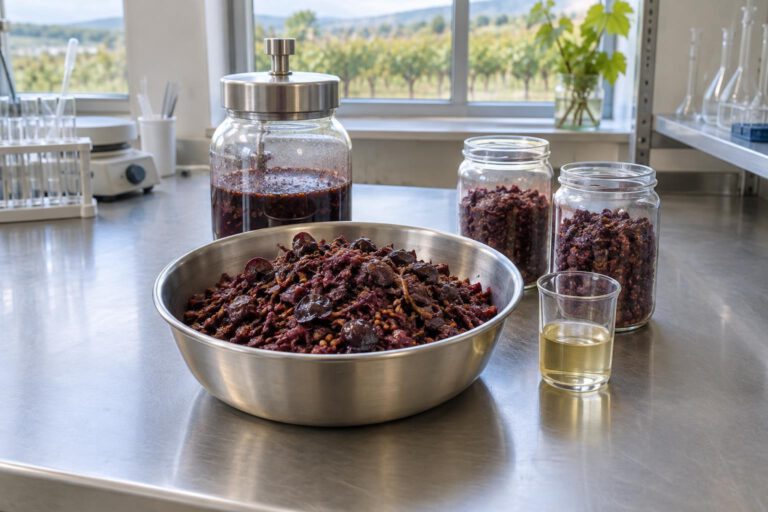
Alcohol-free wine belongs within this discussion too, not on its margins. The Geisenheim project AROMAnoALK is investigating how aroma compounds from fermented grape pomace could improve product quality. That is a research objective, not a ready-made promise of quality. I find this distinction more productive than choosing between blanket enthusiasm and outright rejection.
My argument this week is therefore this: we should measure progress less by how much attention it attracts, and more by the problem it actually solves. A viable wine industry needs special bottles. Above all, though, it needs businesses that can survive beyond those special moments.
Original reviewed by the editors · 5 November 2026