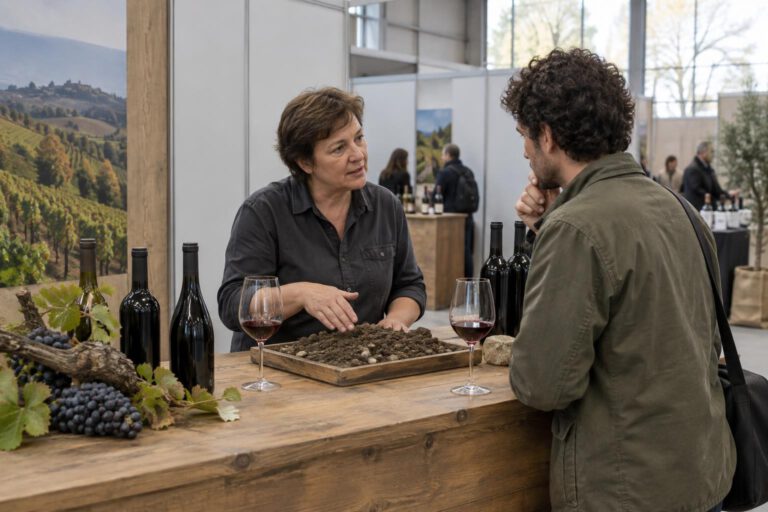
A wine fair is changing its name – and with it, its ambitions. In Paris in 2026, Bio Days will become Journées du Vin. The organiser, La Revue du vin de France, has announced more than a hundred wineries from across France, selected by a tasting committee. On 14 and 15 November, visitors to the Cercle National des Armées will find a broader offering, rather than a selection focused solely on organically run estates.
The move broadens the stage. Whether it will also strengthen or dilute the visibility of organic winegrowing cannot, however, be answered before the fair: the information reviewed contains no reliable breakdown of the proportion of organic and biodynamic exhibitors. For now, the new name describes a broader concept, not its precise balance.
What changes with the name
Bio Days had a clearly defined focus. Demeter France described the 2025 edition as a fair for organic and biodynamic wines: according to the association, more than 70 winegrowers were announced, including almost 20 certified biodynamic estates. For 2026, the organiser is now promoting wineries from across France and a selection made by its tasting committee. Wines will also be sold directly from the stands at the fair.
This is a discernible shift: away from an explicitly organic theme towards an editorially curated wine fair with broader geographical ambitions. The phrase “from across France” promises regional breadth. It does not, on its own, reveal which regions, estate sizes and production methods will actually be represented. Nor is there any publicly available evidence establishing whether organic criteria will continue to play a role in the selection.
Selection is also a market decision
A tasting committee can use quality and diversity as its benchmarks. But selection criteria shape which wines receive attention – and which estates gain visibility through direct conversations with visitors and the trade. For a fair with a broader remit, it would therefore be useful to know not only the number of exhibitors, but also their origins, production methods and overall mix. This includes organic certification and biodynamic farming, for example, but also the question of whether smaller estates will find a place alongside established names.
The publicly available information offers no systematic analysis of this so far. At least one exhibitor confirms its participation: Château de la Gardine has announced that it will attend in November and mentions the opportunity to buy wines on site. That confirms one individual estate, not the breadth or selection rules of the fair as a whole. This snapshot is not enough to judge its new profile.
Visibility takes more than a label
The change need not mean a farewell to organic wine. A larger fair can bring organically run estates additional attention if they are clearly identified and visitors can find them within the selection. Conversely, a general wine fair profile could make the former focus less visible if information on growing methods and certification is not readily accessible. These are possible consequences, not established outcomes.
What matters, then, will be what the exhibitor list reveals and how the fair explains its selection. Clear identification of organic and biodynamic estates would allow its broader ambitions to be assessed without reducing the rest of the selection to a single criterion. For now, it remains unclear how many such estates will take part and whether the organiser will publish the relevant data.
Journées du Vin is scheduled for 14 and 15 November 2026 at Place Saint-Augustin. The change in profile is therefore concrete; its effect on the selection and the presence of organic production can only be assessed using the full exhibitor list and at the event itself. For now, greater diversity is a promise. Whether it also brings greater transparency about origins and farming methods is the real test.
Original reviewed by the editors · 7 November 2026